
Arrest Warrants in Summit County
An arrest warrant is a judge's written order. It authorizes police to take someone into custody in a criminal case. A summons works differently, directing an appearance without immediate custody. Utah's criminal rules require the issuing judicial officer to find a legal basis before signing either one. In Summit County, the case file names the court with authority over the charge. The Justice Court hears many Class B and C misdemeanors and traffic cases. Felonies belong in Utah's Third District Court. Start with a citation, notice, or case number, since the county name alone does not identify the issuing court.
Summit County Arrest Warrant Review
Criminal complaints go to a judge for review. Utah Rule of Criminal Procedure 6 governs arrest warrants and summonses. The court does the evaluating. The Sheriff does not issue judicial warrants, and a records clerk cannot decide whether grounds exist. For a Summit County case, read the Rule 6 text next to the official Justice Court information. Public access has limits. In Summit County, a copy of an issued warrant can stay restricted, and a record not yet served may not be public at all. Utah's Third District Court location page helps route district cases. Only the court named in the case can confirm status.
What a Summit County Arrest Warrant Contains
Read the issuing court and case reference first. Then compare the named person and the charge. The warrant document is a court record carrying identifying and directive details. The statewide public portal may not display every field or follow a standard Summit County numbering pattern. Do not assume a search result equals the full record.
| Warrant / Case Number | Use the reference printed on the court record; no local number format was verified. |
|---|---|
| Named Subject | Compare the full name and other identifiers with care; a name alone may match more than one person. |
| Charge / Offense | Read the filed charge and case context; an allegation is not a conviction. |
| Issuing Judge / Court | Contact the court named on the record to confirm current status and next steps. |
| Bail / Hold | Ask the court whether bail is set, bondable, cash-only, or subject to a hold. |
| Date / Status | Check whether later service, recall, or court action changed the record. |
Summit County Arrest Warrant Serving Agencies
The issuing court controls the warrant record. Officers execute the order within their own jurisdiction. Park City runs its own Police Department, while the Summit County Sheriff serves a different role. The Sheriff posts no public warrant unit roster for the county. Ask the clerk shown on the case. Police reports belong to the agency that created them. A records request to one agency cannot make another court change its docket.
Check the Utah Third District Court route for district-level matters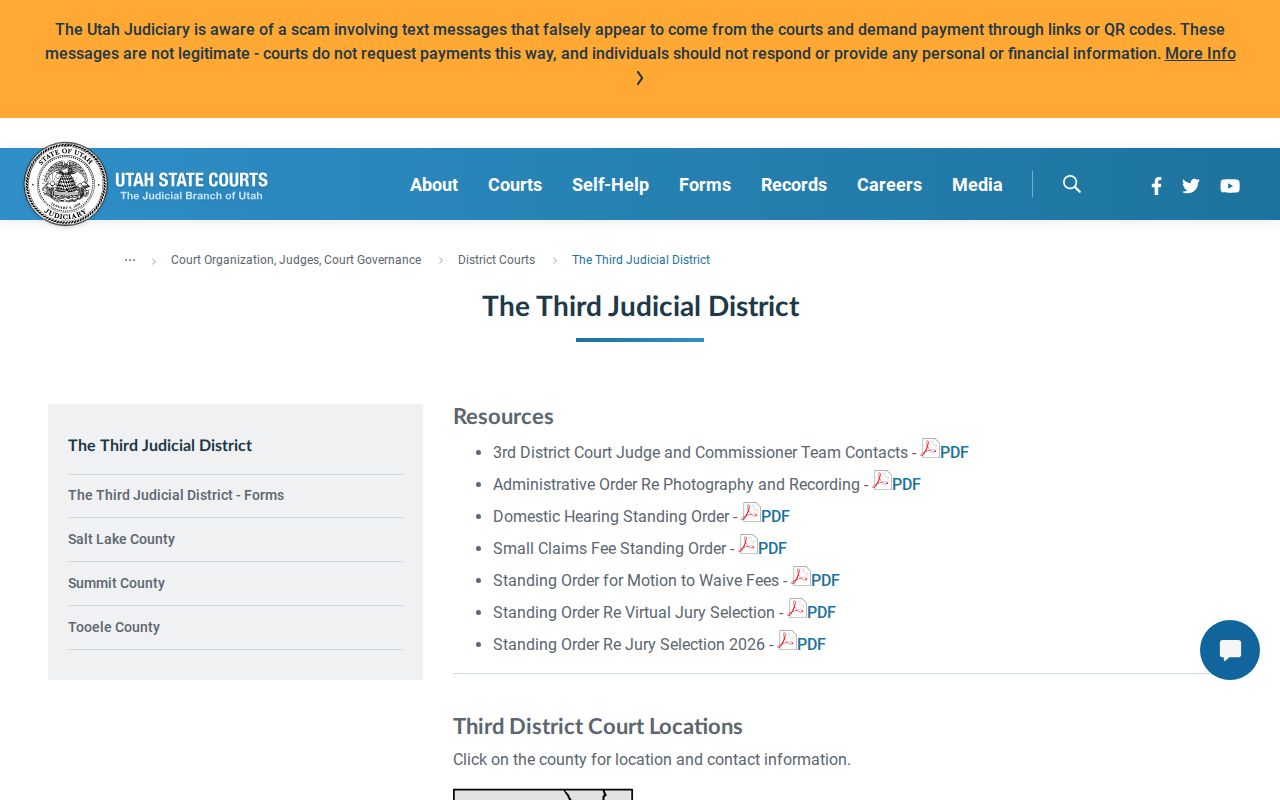
The district court page identifies the route; for Summit County cases, the clerk named on the case confirms the record.
How Arrest Warrants Are Served
The Sheriff and municipal police both serve warrants. Which agency acts depends on jurisdiction and the order itself. Park City has its own Police Department. Treat a Sheriff records number as a records line, not a warrant confirmation line. The city and county keep separate counters. An arrest can mean booking at the Summit County jail and a later court appearance. The jail's contact covers custody and facility questions. It cannot tell you whether the Summit County court has recalled an outstanding order, so ask the issuing court about status and any bail direction before trusting a search page.
Summit County Arrest Warrant and Public Access
Utah's public-record rules treat each record differently. Access depends on type and timing. An arrest warrant may become public after issuance. A court can restrict it before service or under another lawful limit. Search warrants follow separate rules. Sealed, juvenile, and protected investigative records should not be assumed open. A Summit County Sheriff request reaches only the records that office holds. The county uses NextRequest for public-record requests, and its forms page supplies county request materials. A GRAMA request is not a live warrant-status check. The court controls its own case file. With a case number, ask the court which portions are public and whether a separate request is needed; no request will unseal an affidavit or make an active order disappear.
Read Utah Rule 6 on arrest warrants and summonses before interpreting an unfamiliar court document.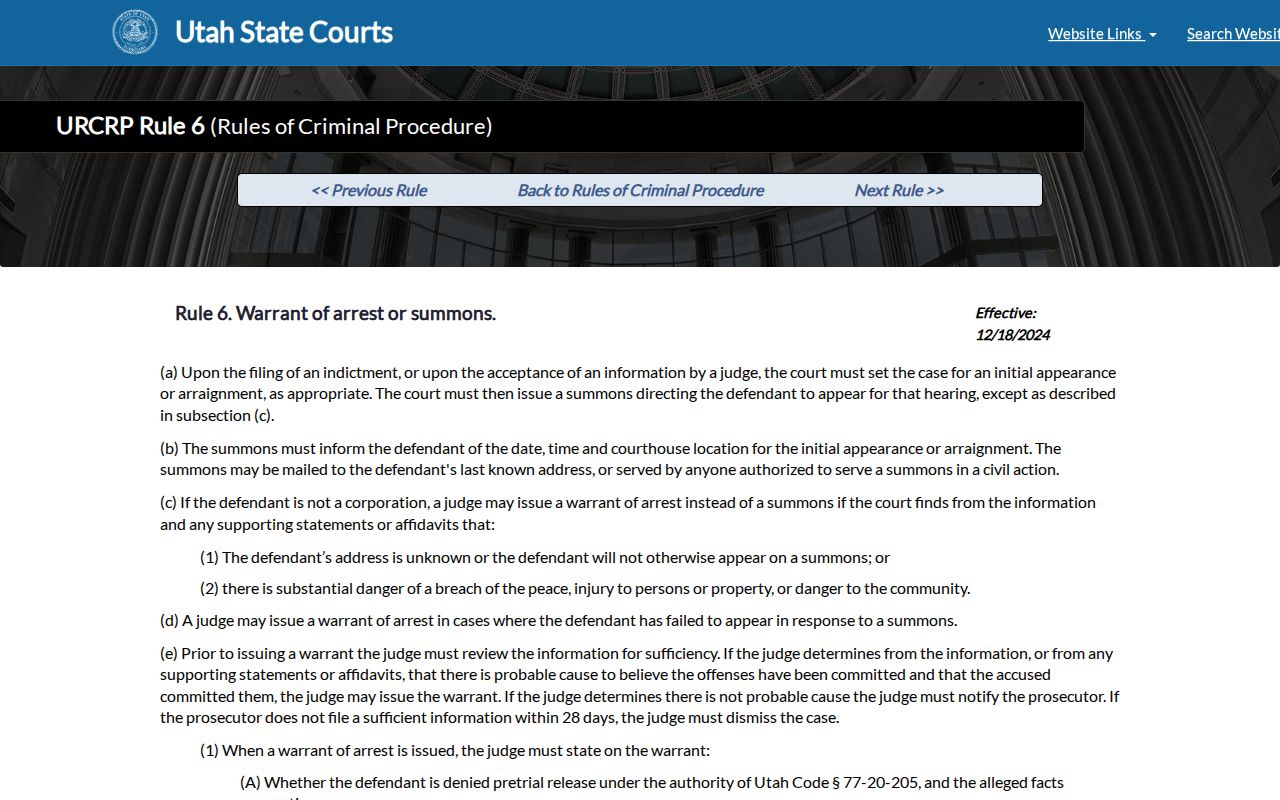
The rules supply procedure; the issuing court confirms the facts and status of a Summit County case.
Arrest Warrant vs Summons vs Bench Warrant
An arrest warrant authorizes custody on criminal process. A summons orders an appearance without directing an arrest. A bench warrant usually follows a failure to meet a court obligation in an existing case. Summit County Justice Court's traffic instructions cover the missed-appearance path, and the county's bench warrant guidance explains that process.
| Feature | Arrest Warrant | Summons | Bench Warrant |
|---|---|---|---|
| What It Orders | Custody under a signed order | Appearance on a stated date | Custody after a missed court obligation |
| Basis | Criminal warrant procedure | Charging and appearance procedure | Failure to appear or comply |
| Who Issues It | Judge or magistrate | Court process under the rules | Judge in the case |
| How to Respond | Confirm court, counsel, and bail route | Appear as directed | Contact issuing court about appearance or recall |
Summit County Arrest Warrant Versus a Local Summons
A summons and an arrest warrant can grow from the same charge, yet they play out very differently. A summons tells you when to show up. Skip that date and the court can respond with its own order. The paper itself states the date and place. Read it rather than trusting a web search. In Summit County, traffic cases are criminal matters under the Justice Court's own instructions. A non-mandatory citation can simply be paid. A mandatory appearance must be attended in person. Miss an arraignment and a warrant can follow. Those traffic rules govern traffic, though, and they do not control every Summit County arrest warrant. Keep the summons or citation, ask the court what the docket requires today, and for a district-level charge call Third District Court instead of assuming Justice Court can change its order.
What to Do If There Is a Warrant for You
First, find out which court issued the warrant. Confirm it is still active. Ask about the exact bail terms, any no-bail or judge hold, and whether a court appearance or motion is required. If the order stands, talk with an attorney about voluntary surrender, posting permitted bond, or a motion to recall or quash it. Payment alone rarely closes the case. The Summit County Sheriff's Corrections and Jail page lists custody contact details. Voluntary surrender does not guarantee same-day release. Transport, booking, court availability, and the warrant's own terms all shape what happens next.
Important: An active order can lead to arrest during law-enforcement contact; ask counsel and the issuing court about surrender, bail, and holds before appearing.
Summit County Arrest Warrant Confirmation Contacts
For a Justice Court traffic or misdemeanor matter, call the court at 435-615-3800. Third District Court Services lists 435-615-4301 for district-court routing. The Summit County Sheriff administrative line is 435-615-3501. Records questions can go to the records contact, though none of these county numbers replaces the issuing court's own decision. Before calling, gather the case number, citation, full name, and date of birth. Ask which court issued the order. Ask whether the warrant is still active. Then ask the clerk what exact process applies to your case. If the matter sits outside Summit County or is federal, its issuing court controls, and a Summit County search may not reach it.